AI Chatbot ROI for Small Businesses: Simple Metrics to Track Success and Profitability
Learn how small businesses can track AI chatbot ROI with simple metrics to quickly confirm investment success.
 Double O
Understanding AI Chatbot ROI for Small Businesses
Small businesses with 1–10 employees often juggle multiple roles and face the challenge of managing customer interactions efficiently. Investing in an AI chatbot can transform these interactions by saving costs and driving revenue — but how do you measure if the investment truly pays off? This article breaks down how to track AI chatbot ROI for small businesses using clear, actionable metrics.
The Business Outcomes Behind AI Chatbots
AI chatbots handle repetitive inquiries like business hours, pricing, and directions, which typically make up 60–70% of customer questions. By automating these, you free up staff to focus on more complex tasks and sales. Chatbots also capture leads 24/7, especially after-hours when 62% of calls to small businesses go unanswered, preventing lost opportunities.
ROI isn’t just about cutting costs; it’s about reallocating labor and boosting revenue. SMBs implementing chatbots report an average return of around 300% within the first year and up to 148–200% ROI within 12 months, according to Q1 2026 benchmarks.
The 90-Day Promise: Early Benefits You Can Track
Most SMBs start seeing operational improvements like faster replies and fewer support tickets within 60–90 days. Full positive ROI usually takes 8–14 months. This means you don’t need to wait a year to notice benefits; early wins can validate your investment quickly.
Five Easy-to-Track KPIs for Your Chatbot
Tracking chatbot success doesn’t require complex analytics. Focus on these five KPIs that any small business can monitor:
-
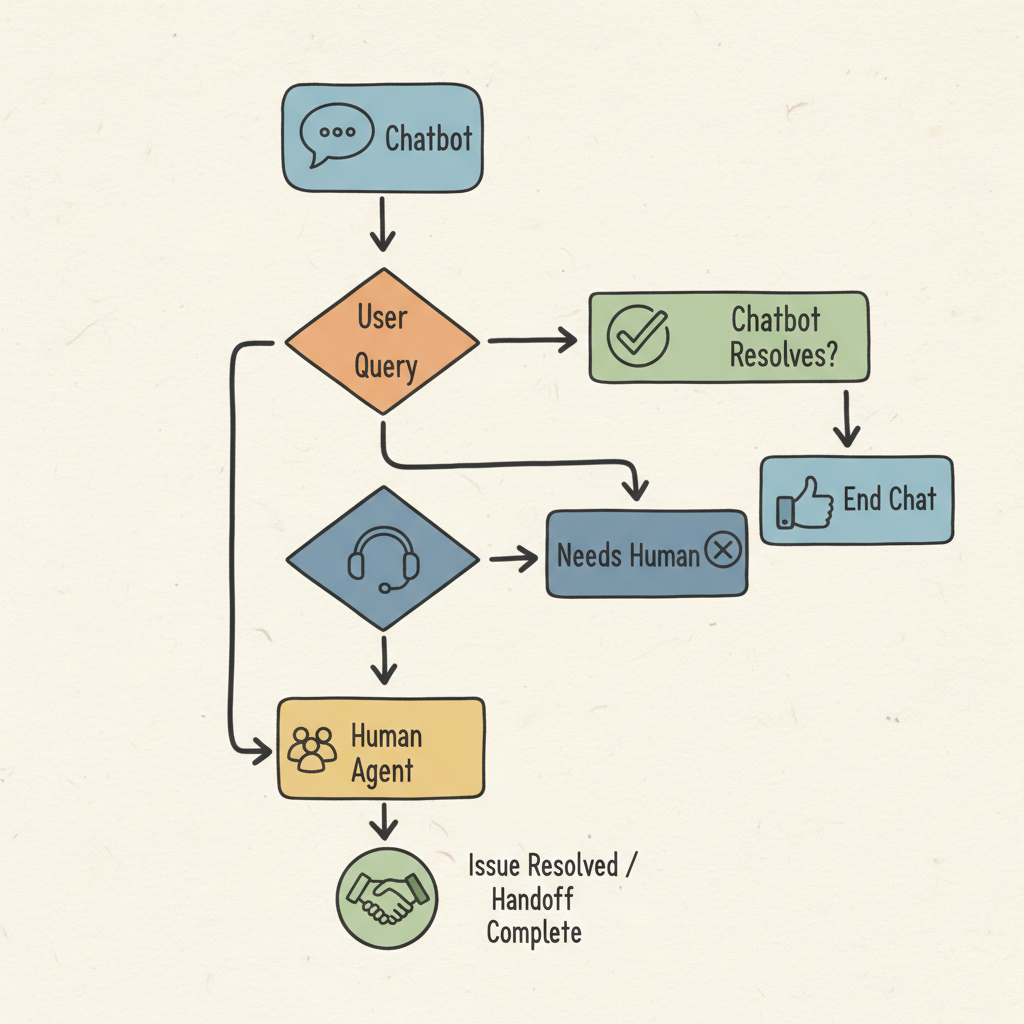
Deflection/Containment Rate: The percentage of inquiries the chatbot resolves without human help. A well-configured Retrieval-Augmented Generation (RAG) chatbot typically handles 40–65% of tier-1 requests.
-
Monthly Ticket Volume: Monitor your average support tickets over three months to see if chatbot use lowers human workload.
-
Cost per Conversation: Compare the cost of a human interaction (usually $5–$15) versus chatbot conversations (around $0.50–$0.70).
-
Captured Leads / Conversions: Track how many leads the chatbot secures, especially from after-hours interactions.
-
Total Monthly Software Cost: Account for subscription fees, overages, and any maintenance time.
Calculating ROI: Simple Formulas for SMBs
Use this core ROI formula for a clear dollar-for-dollar picture:
((Revenue Gained + Costs Saved) − Chatbot Cost) / Chatbot Cost × 100
For internal buy-in, many CFOs prefer the Payback Period metric, which shows how many months it takes to cover the chatbot’s upfront cost based on monthly net benefits:
Payback Period = Total Upfront Costs / Monthly Net Benefit
Why No-Code Platforms Are Ideal for Balkan SMBs
Most 1–10 employee businesses don’t have IT departments. Off-the-shelf no-code chatbot platforms make setup easy and affordable, typically costing $300–$1,500 upfront and requiring 4–16 hours of internal work. Monthly SaaS fees range between $20 and $500.
These platforms allow you to launch a bilingual chatbot (Serbian/English) that serves local customers and regional tourists without hiring extra help.
The Three-Number Dashboard: Simplify Your Success Tracking
To avoid analysis paralysis, focus on three key numbers monthly:
- Deflection Rate: Are your bots resolving enough inquiries autonomously?
- Leads Captured After Hours: Is the chatbot catching conversations when you’re offline?
- Monthly Bot Cost: Are your savings and revenue exceeding what you pay?
This straightforward dashboard helps you quickly determine if your investment is paying off.
Busting Common Misconceptions
- "Chatbots are only for tech giants." Actually, SMBs are leading the ROI charts with off-the-shelf solutions.
- "I need a programmer or big budget." No-code platforms require minimal setup costs and time.
- "ROI takes years." Operational benefits appear in 60–90 days, and full payback usually occurs within 8–14 months.
- "Success means firing people." Bots reallocate labor; staff focus on sales and complex support.
- "One percentage tells the full story." Combine cost savings, revenue impact, and customer experience metrics.
- "Any bot is better than no bot." Quality matters; a poorly configured bot can hurt conversions.
Conclusion
AI chatbot ROI for small businesses is measurable, understandable, and achievable within a reasonable timeframe. By tracking a few simple KPIs and understanding the financial impact through proven formulas, Balkan SMBs can confidently invest in chatbots to reduce costs, capture more leads, and improve customer satisfaction — all without needing a tech team.
Embrace chatbot technology as a practical tool that helps you run your business smarter, not harder.
Sources: dynalord.com, heeya.fr, fastbots.ai, bothero.ai, chatbotgen.com